R.I.P. CRI

It’s been a little over two years since the IES released TM-30-15 IES Method for Evaluating Light Source Color Rendition.  In that time TM-30 has seen growing support in the industry and a growing body of evidence for its accuracy and usefulness.  We’ve nearly reached the moment when we can all agree that it’s time to retire CRI and fully adopt a modern, accurate system of measuring and describing the color rendering of light sources.  What’s wrong with CRI?  Quite a bit, so if you’re not up to date on the issue here’s an overview.

In 1948 The CIE first recommended a color rendering index based on a method developed in 1937.  The 1937 method is a fidelity metric (that is, it compares a test light source to a reference light source) that divides the spectrum into eight bands and compares each band to a full spectrum radiator.  In 1965 the CIE finally adopted CIE 13-1965 Recommended method of measuring and specifying color rendering properties of light sources, based on a test color sample method, what today we call CRI Ra or just CRI.  From the start it was apparent that there were problems.  In 1967 a committee was established to correct for adaptive color shift.  Other problems were uncovered, and in 1974 a formal update was published.  Errors were uncovered in the 1974 edition, resulting in a third version in 1994, which is the version we use today.

So far, so good.  Errors are discovered in the method used and are eventually corrected, so what’s the fuss?  The fuss is that the corrections were minor compared to the scope of the errors, and 23 years after the last correction we still don’t have an accurate, up to date system.  In the early 1990s a proposal to update the formula and test color samples failed to gain consensus.  Two subsequent attempts to improve the metric also closed without adoption.  The current problems, as described in the 2011 IES Lighting Handbook, 10th Edition include:

  • Averaging the color shifts of the eight test colors says nothing about the rendering of any single sample.  A large error in one color can be masked by accurate rendering of the other samples.
  • The test color samples are all of moderate saturation so the index doesn’t reveal color shifts in saturated colors.  In addition, the test colors are not evenly distributed through the color space or the spectrum, so light source spectra can be engineered to score higher than visual observation would indicate.
  • The color space used, the 1964 UCS chromaticity diagram, is no longer recommended for any other use.
  • All chroma shifts are penalized, even though research shows that moderately increasing chroma is desirable in many applications.
  • The chromatic adaptation used has been shown to perform poorly and is no longer recommended for any other use.
  • A single number index gives no information about the direction or extent of color shift for any particular color or color range.

Why haven’t these problems been corrected in the past 23 years?  I’m told that there are two issues.  The small issue is that competing scientific interests on the committee advocate new metrics that they’ve developed as a replacement or supplement to CRI.  The larger problem is that manufacturers on the committee don’t want to see any changes that would reduce the CRI of any of their lamps.  From their perspective, it’s better to have a high score on an inaccurate test than a low score on an accurate one.  It seems that internal politics has been preventing updates, corrections, and improvements.

Although many other color rendering metrics have been proposed over the years, none has been adopted by CIE, which has the most significant voice on this issue.  The result is that the sole internationally accepted metric, which has also been written into product specifications and into codes, is CRI.  That began to change in 2015 with the introduction of TM-30. I’ll have more to say about TM-30 in future posts, but for now let’s agree that CRI Ra is broken and CIE is in no hurry to fix it.  A better system exists, and our industry should adopt it.

The Myth of the Irrelevant Lighting Designer

Kevin Willmorth has a long and interesting article on his blog in which he argues for the recognition of professional lighting designers and what a professional lighting designer is and is not.  The post echoes Chapter 1 of Designing With Light, and many of the things I’ve written here, including promoting the lighting design profession, the value of professional lighting design, the need for projects to use a professional lighting designer (here, here and here),  those other than professional lighting designers making design decisions, and poor documentation of LED products by manufacturers, among other topics.  I don’t have much to add to Kevin’s post, except to say that it’s well worth reading.

IES Lighting Terms and Definitions Now Online

ANSI/IES RP-16 Nomenclature and Definitions for Illuminating Engineering has long been one of the two major documents defining terms related to lighting design (the other is CIE ILV: International Lighting Vocabulary).  RP-16-10 (the 2010 version of the Recommended Practice) is now available online as a searchable database.  From the first page you can click on terms to see the definition and you can also search by keyword.  If you don’t already own RP-16 bookmark this now!

IoT Lighting? No Thanks.

The current global cyber-attack, combined with last year’s “denial of service attack has me thinking about the lighting industry and IoT.

It was ironic that last year’s attack happened just days before the IES annual conference, at which IoT lighting was touted as the next big thing that everyone had to adopt or be left behind. You may recall that one aspect of that attack was that hackers recruited IoT devices like thermostats and smoke detectors. Many designers may think, “Well, sure, homeowners don’t have good security, but that wouldn’t happen to one of my corporate clients.” The current attack shows the flaw in that thinking. New tools have allowed hackers access to supposedly secure networks, and not all networks that should be secure (such as Britain’s NHS) actually are.

The question, then, is, “Why should my lighting system use IoT?” I’ve asked several friends in lighting design firms large and small and the answers I’ve received are revealing. Almost no one has a client who is asking for this. (I’ve had exactly one client who wanted the lighting system connected to the corporate LAN.) Do they want lighting systems connected to their BMS? If the client is knowledgeable and the building is large, yes, although today’s lighting systems have so many programming options we don’t need the BMS to control the lighting system. Do they want lighting systems to use Wi-Fi so that users can adjust the lights from phones and pads? Not very often. “Why would I want to give that many people authorization to change the lighting?” is the question asked, and rightly so. Do they want light fixtures with IP addresses and built-in Wi-Fi, Li-Fi, daylight sensors, occupancy sensors, temperature sensors, humidity sensors, and software that tracks shoppers or monitors space usage? “How much will that cost?” is the usual first question, followed by a strong “No.”

If we designers don’t see an artistic or operational advantage to these systems, and if our clients don’t see an advantage and aren’t asking for these systems, why all the noise about them? The answer, of course, isn’t better lighting design or increased energy efficiency, it’s money. Companies like Cisco see expanded profits from embedding Cisco sensors in every light fixture in a building, connecting all of those fixtures to Cisco POE switches and perhaps controlling the fixtures and sensors with Cisco software. Fixture manufacturers, always looking for a way to differentiate their products, jump on board. Marketing departments create hype, magazines and web sites need material, and voila! the next “must have” lighting system feature.

Who’s providing network security? The corporate IT department, I guess. Are the lighting systems vulnerable to hacking? The current and recent attacks tell us the answer is, “Yes.” Are manufacturers of IoT devices investing in security? Not really. They see it as the responsibility of someone upstream. Would anyone want a lighting system that is vulnerable to being turned off in an emergency, or reprogrammed by someone just to see if they can do it? No.

Some of the lighting systems I am designing are quite complex involving hundreds of fixtures with hundreds of addresses, multiple control protocols, and multiple points of control including touchscreens and Wi-Fi devices. One thing no one has to worry about, though, is high-jacking or corruption of the system. Each system stands alone. Software updates, if they are ever needed, are downloaded and installed via a USB key. Anyone wanting access to the system has to be within Wi-Fi range and has to hack the network. What would they get? Access to a single lighting system. There’s almost no reward and therefore there’s almost no incentive. Call me a Luddite if you like, but for now I’m going to stick to designing secure, flexible systems that provide my clients with only the features that they want at a price they are willing to pay. I’m sure that the pressure to “innovate” will eventually lead me to using these IoT systems. But for security’s sake I’m going to resist for as long as I can.

Design Guide for Color and Illumination

As the co-chair of the IES Color Committee I am delighted (pun intended) to announce the publication of the Design Guide for Color and Illumination.  The guide is the result of over five years of work by more than a dozen researchers, engineers, manufacturers, and designers from across the globe.  Here’s part of the description on the IES site.

Color can be described using concrete values such as chromaticity coordinates, spectral power distribution, or others discussed later in this guide. However, one’s response to color can be much more personal and emotional—and therefore more difficult to quantify. This guide takes the reader from basic vision and color vocabulary, through methods of measuring and quantifying color, and culminates in the practical use of commercially available white light and colored lights. The definitions, metrics, and references discussed will assist in building a critical understanding of the use and application of color in lighting.

It is probably the best, most thorough discussion of light and color available today.  Everyone interested in color, color perception, color rendering, and their relationship to light should read it.  It will be available at the IES booth at Lightfair.

Design Is A Process, Not Just A Product

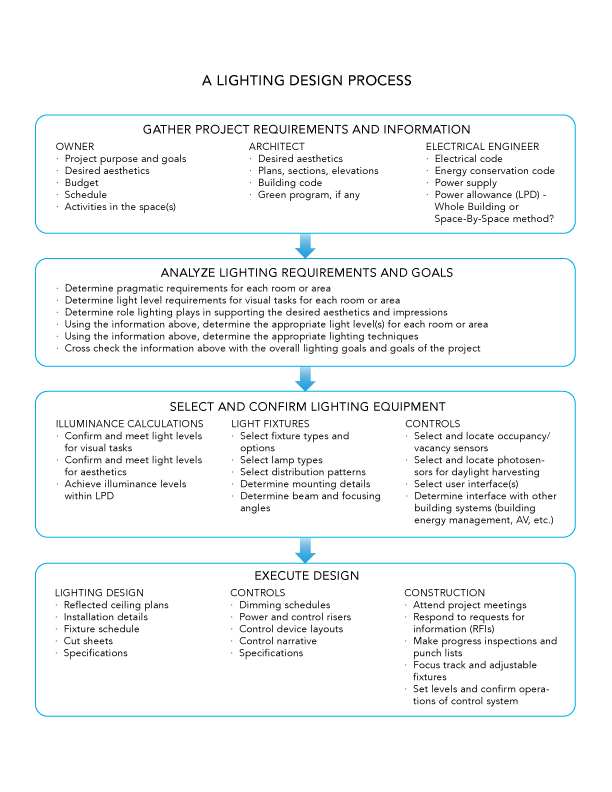
I often tell my students that design is as much a process as it is a product. Even so, they (and some of my clients) sometimes want to go from first meeting to finished design in one step. I suppose one could do that, but the result wouldn’t be a thoughtfully appropriate design, it would just be fixture selection. The difference lies in the early part of the design process where we gather information about the project and the expectations of the stakeholders, followed by an analysis of that information towards the stated goals of the project. Only after completing those two critical steps can we begin the work of putting the design together and executing it. Here’s one way of looking at the entire process.Lighing-Design-Process

What Happened to IYL?

Elizabeth Donoff asks “International Year of What?” in her editorial in this month’s Architectural Lighting, and I have to agree with her.  Early last year I noted that our professional organizations showed no plans to take advantage of the International Year of Light, and indeed nothing worth mentioning happened.  The professional societies of the lighting community (IES, IALD, etc.) added the International Year of Light logo to their web sites, but that’s about all.  They held no significant events, published no important documents, and made no efforts to raise the visibility of the profession with potential employers (architects and owners) or with the public at large.  The IALD boasts that their regularly scheduled events were added to the IYL calendar, but say nothing as to what resulted, probably because the result was nothing.  Lightfair 2015 was business as usual, I saw no recognition of IYL.

The entertainment industry did no better.  United Scenic Artists Local 829, the union for theatrical designers, didn’t recognize the opportunities, nor did USITT, and at LDI (the entertainment industry equivalent of Lightfair) there was no sign that anyone knew about IYL.

As I’ve written before (see here and here, for example), and as many of us know, far too many projects are built with poor lighting because lighting design is seen as an added cost that can be avoided by having the architect, electrical engineer, or lighting sales person provide the “design” instead of a trained, professional lighting designer.  Hoping this will change won’t change this.  On an individual level, designers can educate their clients about the benefits of thoughtfully designed lighting, but it takes a larger, more expensive effort to reach those who don’t interact with lighting designers.  Only manufacturers or professional organizations have the resources.

What could they have done in 2015, or what can they do this year?  For starters, I’d like to see the IALD and/or the IES sponsor  sessions on lighting design at the annual conventions of organizations such as  AIA, ASID, and SCUP.  Let’s get in front of the decision makers and teach them about what good lighting can mean to them.  Topics such as energy efficiency, code compliance, and daylighting, as well as the more artistic and aesthetic sides of lighting design, are all appropriate and would, I think, be well attended.  If we want lighting design to be seen as an integral part of any building project we have to work at it.  Adding a logo to a web site isn’t enough.

Who Needs A Lighting Designer? Museums and Galleries!

A few weeks ago I gave a three-hour seminar on lighting museums and galleries to the graduate students in an art curating program at a university here in New York. Condensing everything I’d like to say into less than three hours was tough. The two big questions were what to include and what to leave out. I started with a quick overview of how to think about light and lighting before moving on to basic vocabulary and some common lighting techniques. Then, since LEDs are clearly the future, even when lighting art, I moved on to an overview of both color temperature and color rendering. I talked about reference materials such as the IES Lighting Handbook, intensity and brightness ratios, and other considerations before we moved into their gallery space to use their track light system for some demonstrations.

After the whole affair a faculty member, who sat in on most of the seminar, said he had hoped I would have spent much more time talking about how to use track lights and less time on unimportant issues like design, color temperature, and color rendering (!). I was respectful, but stunned. Focusing track lights is so complex that it requires extensive demonstrations? Understanding that with LEDs the color qualities of the light vary widely, and can only be properly selected when they are understood is unimportant information? Uhh…NO. Or, as my 20 month old niece says, “no no no no.”

Yes, five or ten years ago the default light source in museums was an incandescent or halogen lamp. The color temperature difference was minor and the color rendering of both was excellent. That’s not true today. Look at the cut sheet for any museum grade track light and you’ll see that you have a choice of several color temperatures and CRI values. If ANYONE needs to understand the qualities of light that must be selected when using LED fixtures, if anyone needs to understand the affect that color temperature and CRI have on how colors are perceived, it’s certainly people involved in displaying and lighting art. To me, that means the curators of exhibits and the lighting designers they hire.

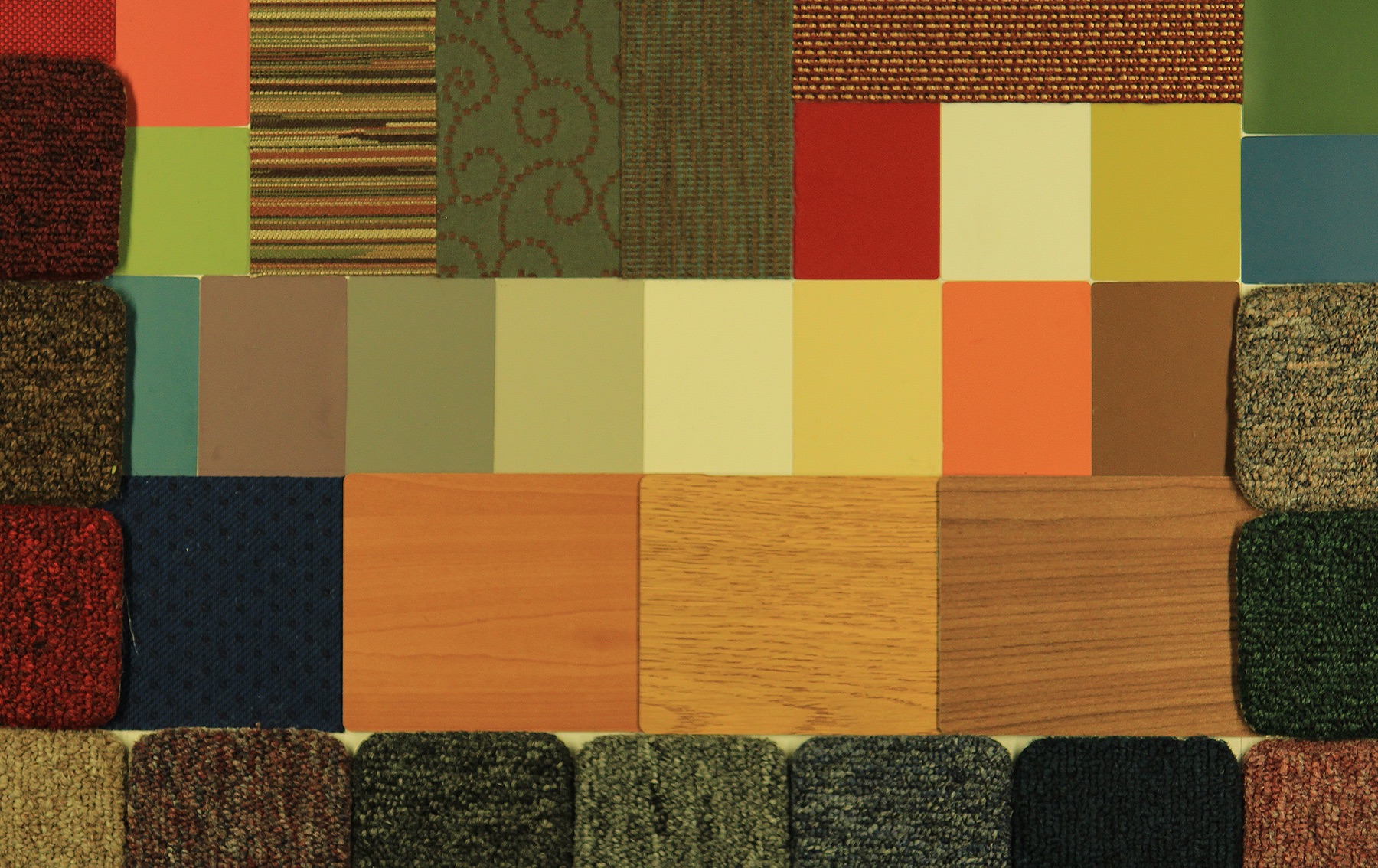
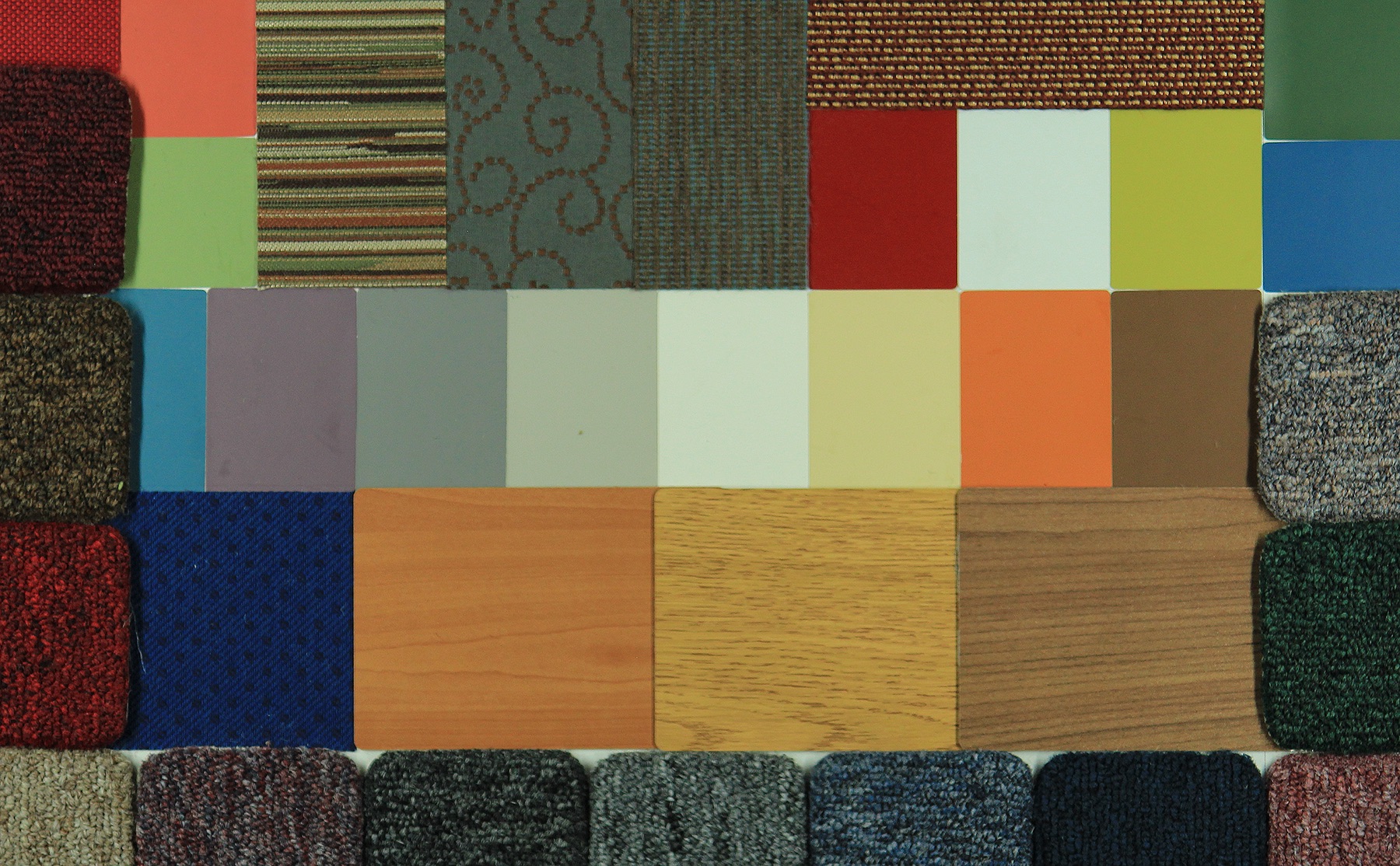
As I’ve discussed earlier, changing the color temperature of the light changes the color appearance of objects, as shown below.

Illuminated with Warm White Fluorescent Lamp
Illuminated with 3000 K light
Illuminated with Cool White Fluorescent Lamp
Illuminated with 4000 K light

The phenomenon of color consistency means that the shift in color appearance isn’t as great as one might expect or as these photos suggest, but the shifts are real. If you’ve ever bought a black garment only to discover later that it was actually dark blue you’ve experienced this shift. A similar thing happens when we compare a high CRI light source and a low CRI light source. If your work involves color perception this is basic and critical information.

Curators can be forgiven for not knowing much about this, but if they know nothing how can they collaborate with their lighting designer to show the art as they intend? Administrators and curators of museums and galleries – educate yourselves, then hire a lighting designer!

Who Needs A Lighting Designer? Schools!

Studio T+L is the theatre consultant on the theatre in a new school here in New York. During an early meeting with the architect I explained that I prefer to have the dimming and control system for the stage lighting also control the house lighting, so I’d like to schedule a meeting with the lighting designer to talk about coordinating our work.

I wasn’t surprised (although I was disappointed) to be told that the design team for this new school building doesn’t include a lighting designer. Who’s designing the lighting in the classrooms, offices, theatre and other spaces? It’s hard to say. The plan is that one of the architect’s lighting sales representatives will present them with a choice of light fixtures, the architect will select the fixtures, and the electrical engineer will lay them out and circuit them. Unfortunately, this is an all too common approach that results in mediocre lighting, at best. Here’s why…

For starters, it’s highly unlikely that the architect has a deep enough understanding of vision, visual tasks, current fixture technology, control technology, code requirements, and the lighting design requirements of educational facilities to thoroughly evaluate the lighting needs of the school and the various types of spaces that it holds. It’s much more likely that the architect is working with a possibly outdated rule of thumb such as, “Schools should be lit to 50 fc.”   The sales rep, even if he/she is capable, isn’t going to invest any time or effort in a deeper evaluation of the school’s needs because the fixture sale (not good lighting) is the goal, so meeting the architect’s requirements is all that he/she has to do. The electrical engineer is simply implementing the architect’s instructions. He/she is given the selected fixtures and told to arrange them to provide 50 fc, and make sure to cover the code requirements.   What’s missing is any thought about how the spaces will be used and the actual needs of the occupants .

I believe that design is as much a process as it is a product.  A lighting designer would not assume that all school lighting is the same, and that as long as there’s enough light the lighting will be good enough. A lighting designer would talk to the school about their present facility, and about the good and bad aspects of the current lighting. The lighting designer may consult one or more of the available guides to quality lighting design for schools such as ANSI/IES RP-3-13 Lighting for Educational Facilities, and would look for opportunities to include daylighting as one element of the overall lighting design. A lighting designer would look at the sustainability and energy efficiency aspects of the lighting system and factor that information into the overall design. A lighting designer would take the time to understand how various types of classrooms are used, and would lay out fixtures and select controls accordingly.

I’m sure that none of this is happening on this school project.

And, not just any lighting designer will do. It behooves architects to have some understanding of the lighting needs for the building types they design to make sure the lighting designers they hire doing their job.  For example, my classes at Parsons School of Design in Manhattan are held in a building that is less than five years old.  It  that was designed by a prominent architect. However, the classroom I was in last semester had terrible lighting.  The room has two rows of direct-indirect pendant fixtures. The uplight and downlight components are controlled together, and all of the fixtures are controlled by one dimmer, so all of the lighting in the room works as one. The problem? The projection screen is bathed in light that washes out the image, and there’s no way to dim or turn off only the fixtures that affect the screen. There are lighting controls by the door, but none by the instructor’s computer station, so I find myself walking back and forth across the room to make adjustments to the light as I constantly balance my students’ need to see the screen with their need to see their notebooks. This is a rookie mistake, and any experienced designer worth his or her salt should have immediately seen the potential problem and selected fixtures, a layout, and controls to avoid it, but it didn’t happen.

So, who needs a lighting designer? Schools and the architects who design them.

NEMA Misrepresents IES TM-30

On November 12 the National Electrical Manufacturers Association (NEMA) published a position paper on IES TM-30-15. The document is here. It seems to be a willful misunderstanding and misrepresentation of TM-30. Here’s how…

The paper opens with NEMA’s support of an improved color metric but then goes on to say that “NEMA opposes any mandatory reporting or performance requirements for IES-Rf or IES-Rg.” This is a strange opening since neither the IES, in general, or TM-30, in specific, is proposing mandatory requirements. In fact, the IES’s own position paper on this states that “As with any IES Technical Memorandum, TM-30-15 is not a required standard.” So the paper begins with alarm about a non-issue.

Next, it says that, “Any single-number fidelity measure (such as Ra or the new Rf) that averages the results of many colors in a light source could possibly have a high numerical value and yet perform poorly with some specific colors.” Exactly. That’s the problem with CRI Ra, only a single number is reported. The great advantage of TM-30 is that in addition to the average fidelity value Rf, the calculation tool allows designers to see 1) the fidelity within color groups, called Hue Angle Bins, that encompass the entire color space 2) the direction of hue shift (if any) as displayed in the Color Vector Graphic, and 3) the Rf for each of the 99 Color Evaluation Samples (CES). Far from being a single value, as with Ra, TM-30 provides designers with layers of additional information about the performance of the lamp in question.

In the next paragraph we are told “The IES-Rg metric can have a value greater than 100 and yet saturation might be lower than the reference light source for certain colors.” Right again, but in a misleading way. As with color fidelity, TM-30’s evaluation of color gamut is layered. Rg represents the average shift in saturation of the 99 CES. If a specifier wants deeper information it is available in the calculation tool as 1) a CES chromaticity comparison that plots the CES under both the reference illuminant and the test source so that one can see the shift 2) a graph showing the change of chroma by Hue Angle Bin.

The entire third paragraph complains that if Rf is 100 there can be no increase or decrease in Rg – saturation is held at 100, too. This is like pointing out that the problem with taking a bath is that you get wet and soapy. The interrelation between Rf and Rg is a feature, not a bug. When the fidelity index of a light source matches it’s reference then OF COURSE they will produce the same saturation of colors. If one wants to purposely increase or decrease saturation the only way to do so is to use a light source that is NOT an exact match to the reference source, and hence one that has a lower fidelity value. The relationship between Rf and Rg are shown as a graph in the calculation tool to help designers visualize the values that the tool calculates. That’s a good thing.

Finally, the paper concludes with “It is premature to consider IES TM-30-15 as a mandatory requirement or regulation because the metrics are likely to evolve.” As I said at the beginning, this is a non-issue.

The IES developed and issued TM-30 because CRI does not consistently and accurately represent the color rendering of many light sources, especially narrow band emitters like LEDs. This issue is well known and completely accepted by the industry, including the CIE. (A list of CRI’s shortcomings is included in the latest edition of the IES Lighting Handbook.) The IES position is that TM-30 “has been developed for the benefit of the lighting community to provide: (a) a more accurate assessment of color fidelity; (b) an additional, complementary assessment of the influence of the preferred color appearance of objects (related to color gamut); and (c) more detailed information about the rendition of specific colors.“ and goes on to say that, “the issuance of TM-30-15 will enable the international lighting community to carefully evaluate it, providing a path leading to improved standards and design guidance. Technical analysis and feedback regarding the method described in TM-30 will be critical to continued development and standardization of color quality metrics.” In other words, “We think this is a good tool. We’re publishing it so that other concerned parties can evaluate it. We hope that this will trigger the acceptance of TM-30 or the development of another tool.”

Clearly NEMA as an organization, or members of their Lighting Systems Division, has a problem with the IES issuing TM-30, but the position paper is a red herring. It stirs up alarm over TM-30 becoming a requirement or regulation when the IES has noted that isn’t the purpose of a TM, and attempts to point out shortcomings that actually belong to CRI, not to TM-30. I don’t know about the politics involved here, but I do know that this paper should be read with skepticism.