Focal Point Introduces TM-30 Based “Preferred Light”

Today Focal Point Lights of Chicago, IL introduced a series of fixtures that feature what they call Preferred Light.  Preferred Light is based on recent studies at PNNL and Penn State, plus their own study, and uses TM-30’s Rf, Rg, and Hue Bin 16 values to establish a balance of fidelity, saturation, and red rendering that is “visually appealing to humans.”

The overall idea is that people seem to prefer a light source that slightly over saturated most colors, especially red.  “Using a custom LED mix, Focal Point defines Preferred Light using TM-30-15 metrics as having a fidelity (Rf) of 89, a gamut (Rg) of 107, and over-saturating Hue Bin 16, deep red content, by 9% at a [Correlated] Color Temperature of 3500K.”  So, by using the statistical measures of TM-30 and applying them to the related topic of color preference Focal Point has identified an optimized set of LED products to meet their customers’ needs.

I’ll be the first to admit that it may be risky to base all of this on only three studies, but other studies have shown that the TM-30 results can be applied in this way, and are also showing us the relative importance of the various calculated values.  I’m excited to see the industry using the tools, and am looking forward to seeing the Preferred Light for myself.

IoT Lighting? No Thanks.

The current global cyber-attack, combined with last year’s “denial of service attack has me thinking about the lighting industry and IoT.

It was ironic that last year’s attack happened just days before the IES annual conference, at which IoT lighting was touted as the next big thing that everyone had to adopt or be left behind. You may recall that one aspect of that attack was that hackers recruited IoT devices like thermostats and smoke detectors. Many designers may think, “Well, sure, homeowners don’t have good security, but that wouldn’t happen to one of my corporate clients.” The current attack shows the flaw in that thinking. New tools have allowed hackers access to supposedly secure networks, and not all networks that should be secure (such as Britain’s NHS) actually are.

The question, then, is, “Why should my lighting system use IoT?” I’ve asked several friends in lighting design firms large and small and the answers I’ve received are revealing. Almost no one has a client who is asking for this. (I’ve had exactly one client who wanted the lighting system connected to the corporate LAN.) Do they want lighting systems connected to their BMS? If the client is knowledgeable and the building is large, yes, although today’s lighting systems have so many programming options we don’t need the BMS to control the lighting system. Do they want lighting systems to use Wi-Fi so that users can adjust the lights from phones and pads? Not very often. “Why would I want to give that many people authorization to change the lighting?” is the question asked, and rightly so. Do they want light fixtures with IP addresses and built-in Wi-Fi, Li-Fi, daylight sensors, occupancy sensors, temperature sensors, humidity sensors, and software that tracks shoppers or monitors space usage? “How much will that cost?” is the usual first question, followed by a strong “No.”

If we designers don’t see an artistic or operational advantage to these systems, and if our clients don’t see an advantage and aren’t asking for these systems, why all the noise about them? The answer, of course, isn’t better lighting design or increased energy efficiency, it’s money. Companies like Cisco see expanded profits from embedding Cisco sensors in every light fixture in a building, connecting all of those fixtures to Cisco POE switches and perhaps controlling the fixtures and sensors with Cisco software. Fixture manufacturers, always looking for a way to differentiate their products, jump on board. Marketing departments create hype, magazines and web sites need material, and voila! the next “must have” lighting system feature.

Who’s providing network security? The corporate IT department, I guess. Are the lighting systems vulnerable to hacking? The current and recent attacks tell us the answer is, “Yes.” Are manufacturers of IoT devices investing in security? Not really. They see it as the responsibility of someone upstream. Would anyone want a lighting system that is vulnerable to being turned off in an emergency, or reprogrammed by someone just to see if they can do it? No.

Some of the lighting systems I am designing are quite complex involving hundreds of fixtures with hundreds of addresses, multiple control protocols, and multiple points of control including touchscreens and Wi-Fi devices. One thing no one has to worry about, though, is high-jacking or corruption of the system. Each system stands alone. Software updates, if they are ever needed, are downloaded and installed via a USB key. Anyone wanting access to the system has to be within Wi-Fi range and has to hack the network. What would they get? Access to a single lighting system. There’s almost no reward and therefore there’s almost no incentive. Call me a Luddite if you like, but for now I’m going to stick to designing secure, flexible systems that provide my clients with only the features that they want at a price they are willing to pay. I’m sure that the pressure to “innovate” will eventually lead me to using these IoT systems. But for security’s sake I’m going to resist for as long as I can.
With LEDs, Knowledge is Power

I’ve been hired to review an architect’s lighting design and then design an appropriate control system. The fixtures selected are all LED products by a manufacturer that falls into the high-end residential/economy commercial range of quality and price. The cut sheets are extremely frustrating. After nearly a decade of LED lighting, and with all of the progress the industry has made in setting standards so that designers and specifiers know what they’re getting, this manufacturer still tells us nothing. What basic information is missing?

 Lamp life. The only information even remotely connected to lamp life is the statement that the fixture is covered under a five-year warranty. There’s nothing else. Not a word. How much light, compared to initial output, can we expect at that five-year mark?  We have no idea.

LEDs do not fail like other lamps do.  They gradually dim as they age.  At what point is the light output so low that we’d say the lamp is no longer useful?  Right now the answer is when the light output has fallen to 70% of the initial output (often referred to as L70), although many designers prefer to use 80% of initial output (referred to as L80).  This is calculated using a procedure developed by the IES and designated as LM-80 (details are here and here).  What we want, at a minimum, is the IES LM-80 calculation of lamp life to 70% of initial output. L80 data would be even better.

 Warranty. The warranty is not on the manufacturer’s web site so, although we’re told that it is good for five years, we have no information about what is covered and what is excluded.

 LED manufacturer. With all other lamp types the designer chooses the exact lamp for the project. Criteria such as initial lumen output, mean lumen output, lamp life, color temperature, CRI, and the manufacturer’s reputation for quality are all valid considerations. We have standards that allow designers to make valid comparisons between LED products, too, but we can do that only if that information is generated and shared. I suspect that this fixture manufacturer uses LEDs from a several manufacturers based on the best price available, and that the performance of those LEDs varies widely.

 Color consistency. The cut sheet says that the standard applied to their LED selection is, “minimum 3-step color binning.” We are left to infer that means three-step MacAdam Ellipses.  A one-step MacAdam Ellipse describes a region on a chromaticity diagram or color space where the edges of the ellipse represent a just noticeable difference from the color at the center (additional information on MacAdam Ellipses is here and here).  The data is usually plotted on the CIE 1931 (x, y) chromaticity diagram.  The diagram below shows 10-step MacAdam Ellipses.

"CIExy1931 MacAdam". Licensed under CC BY-SA 3.0 via Wikimedia Commons - http://commons.wikimedia.org/wiki/File:CIExy1931_MacAdam.png#/media/File:CIExy1931_MacAdam.png
“CIExy1931 MacAdam”. Licensed under CC BY-SA 3.0 via Wikimedia Commons – http://commons.wikimedia.org/wiki/File:CIExy1931_MacAdam.png#/media/File:CIExy1931_MacAdam.png


The color variation within a three-step ellipse would be noticeable to over 99% of the population.  Worse, though, is that a three-step ellipse is the minimum, not the maximum. Knowing this, the designer should have no expectation of color consistency from one fixture to another.

 Photometrics. The cut sheet contains no information about the optical performance of the fixture. IES files are available, but it’s very difficult to look at the array of numbers and understand performance, which is why the good manufacturers include photometric information on their documentation, including candlepower distribution curves and CU tables.

Part of my review will be pointing out the lack of data about the specified fixtures and recommending several alternates by manufacturers who provide the information necessary to evaluate their products.

Student Custom Fixtures

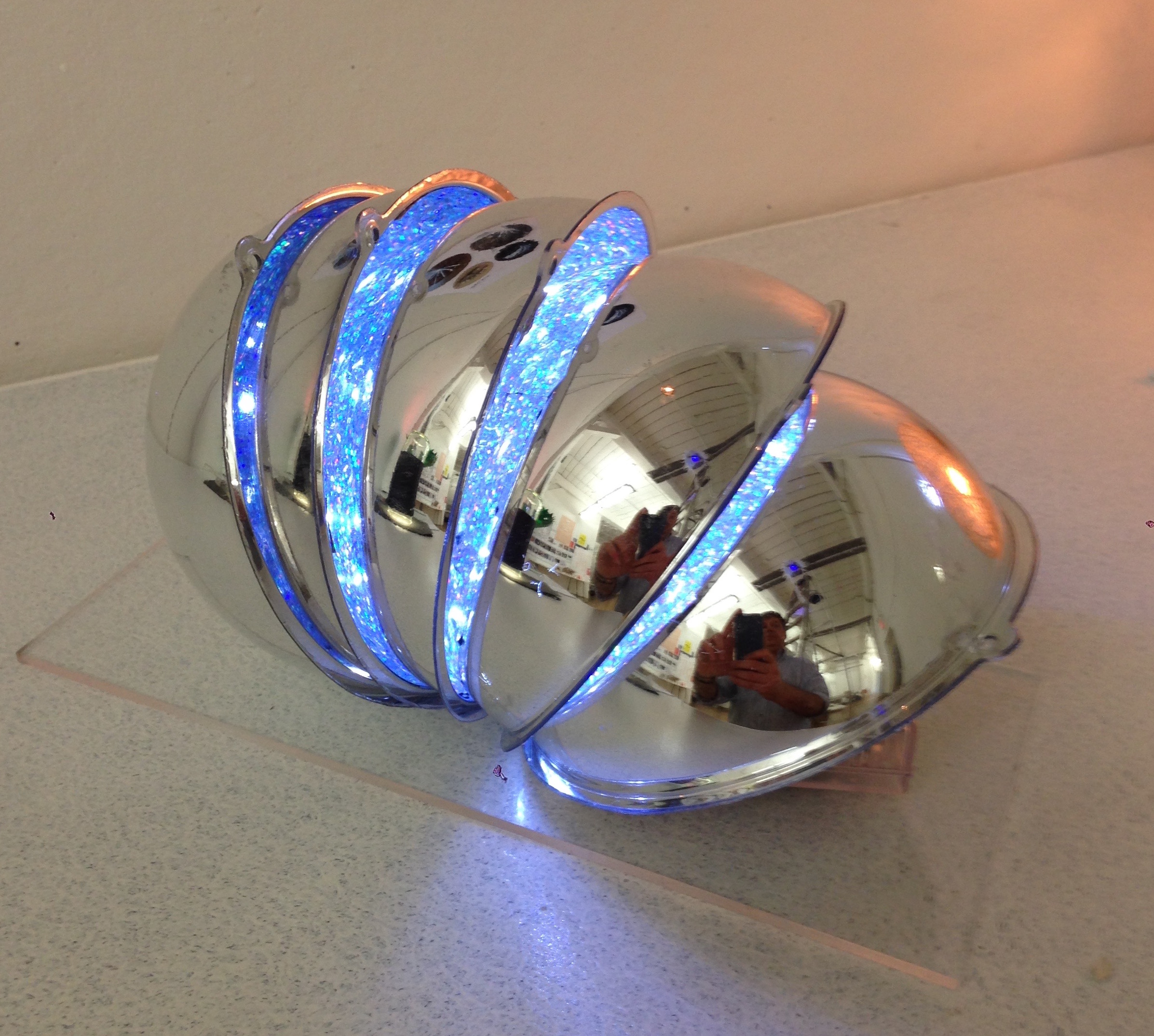
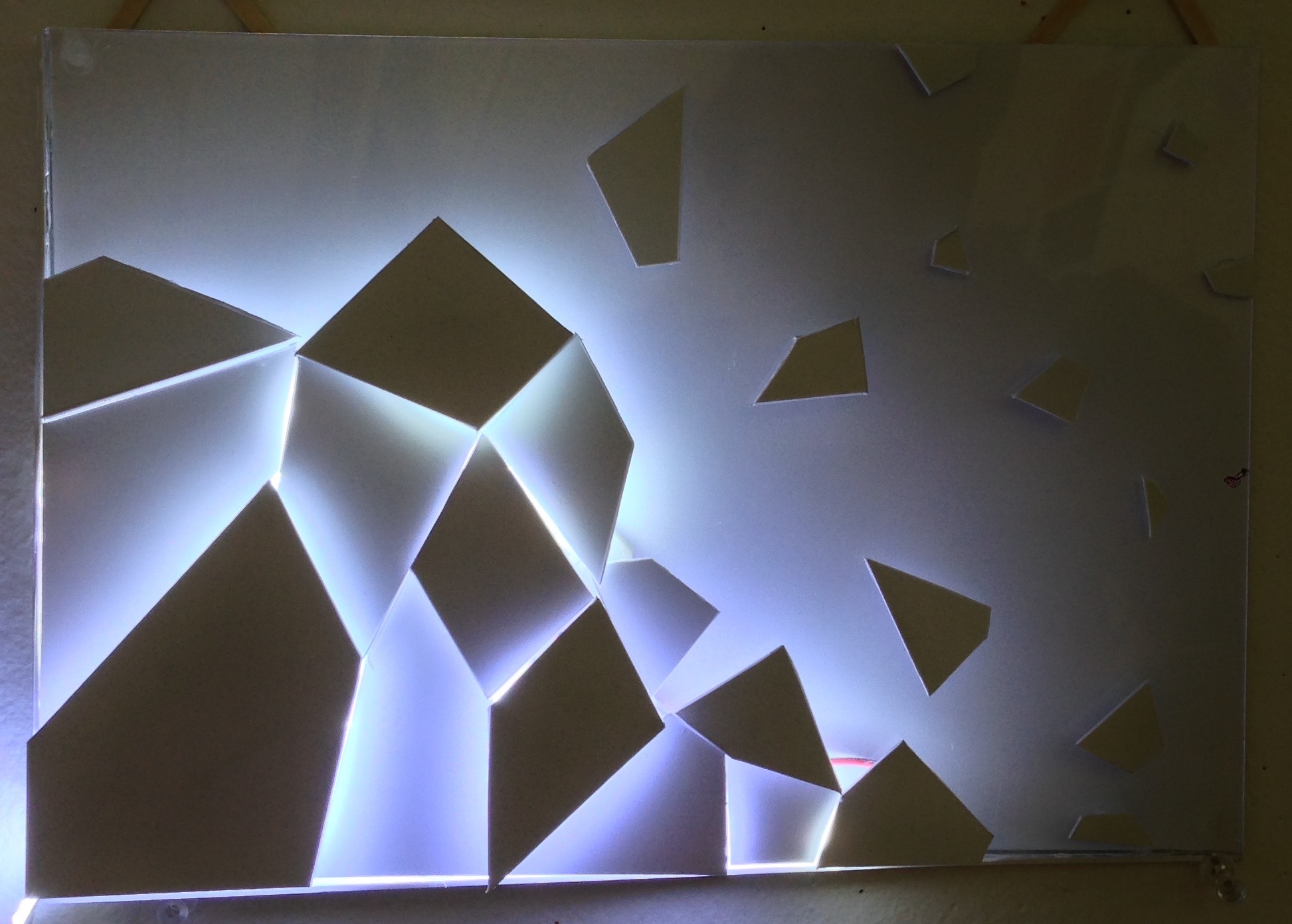
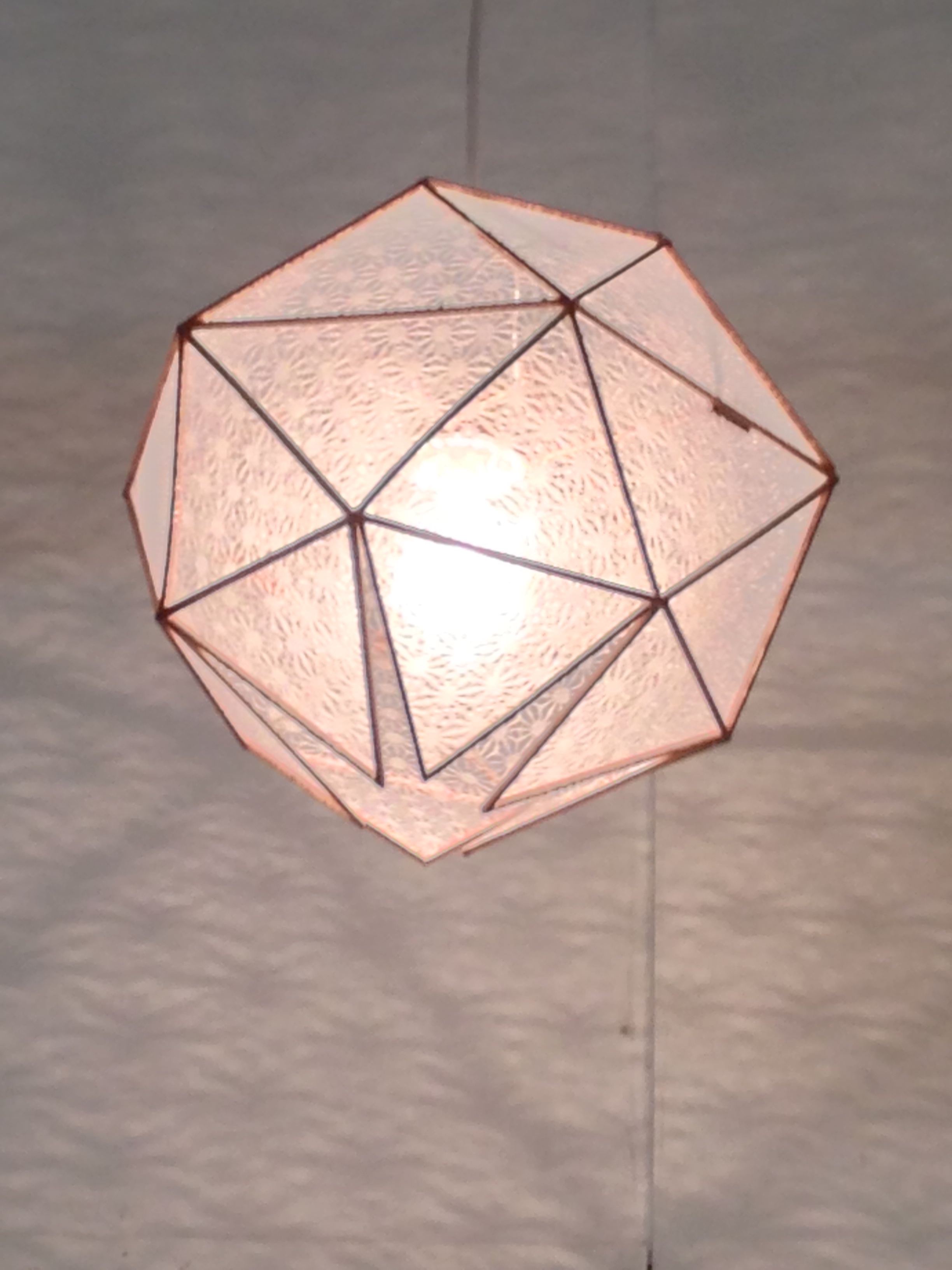
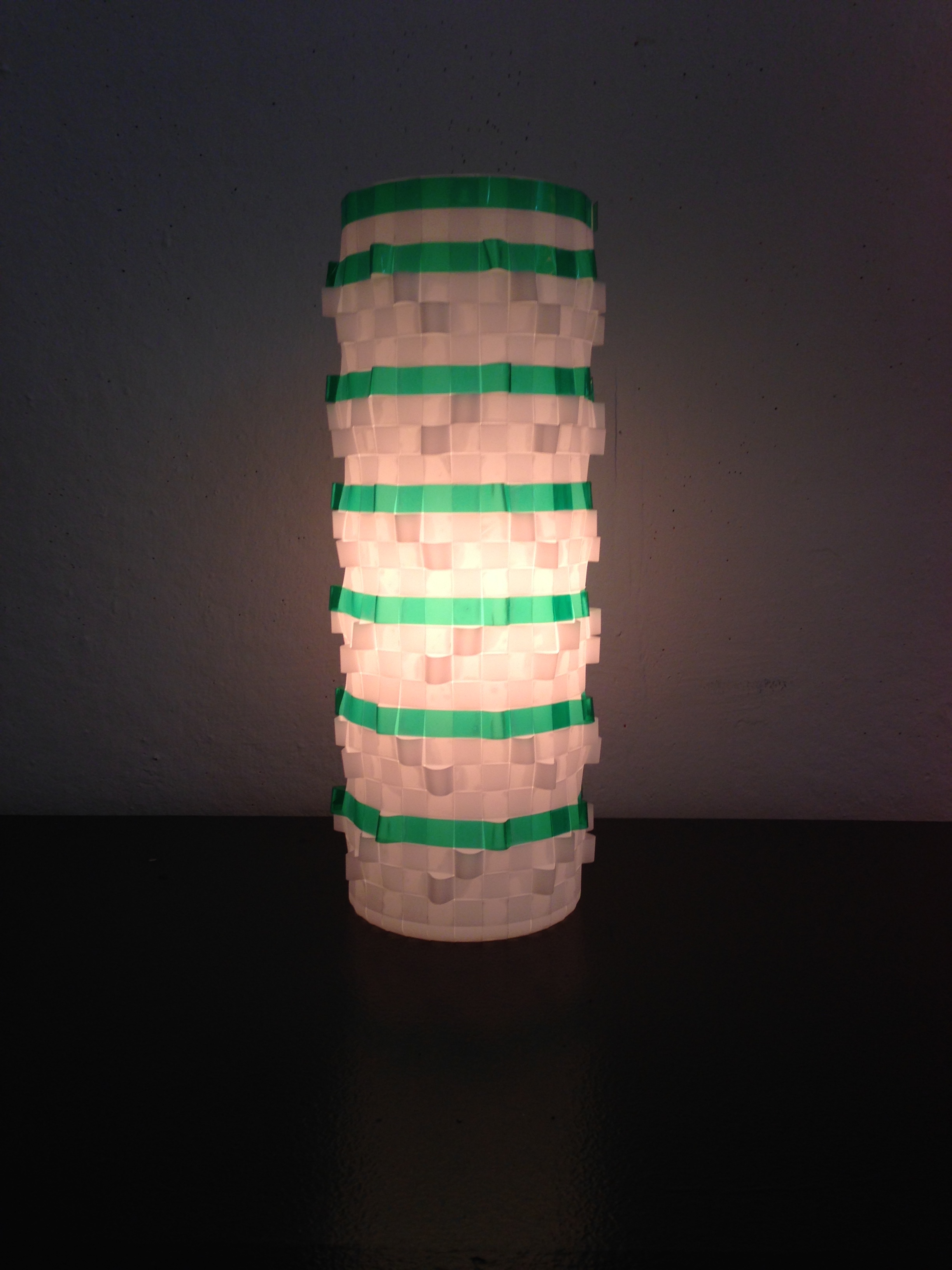
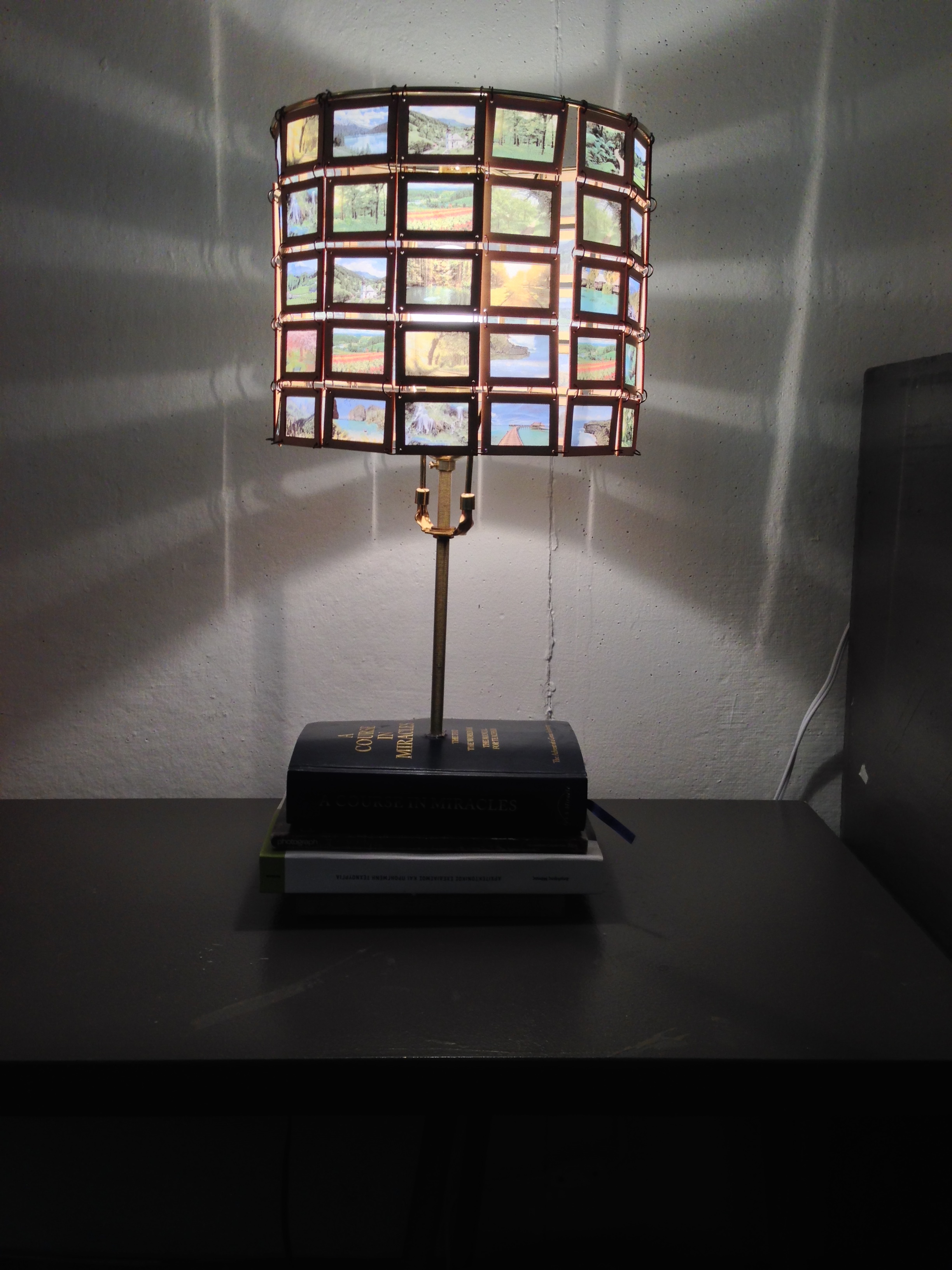
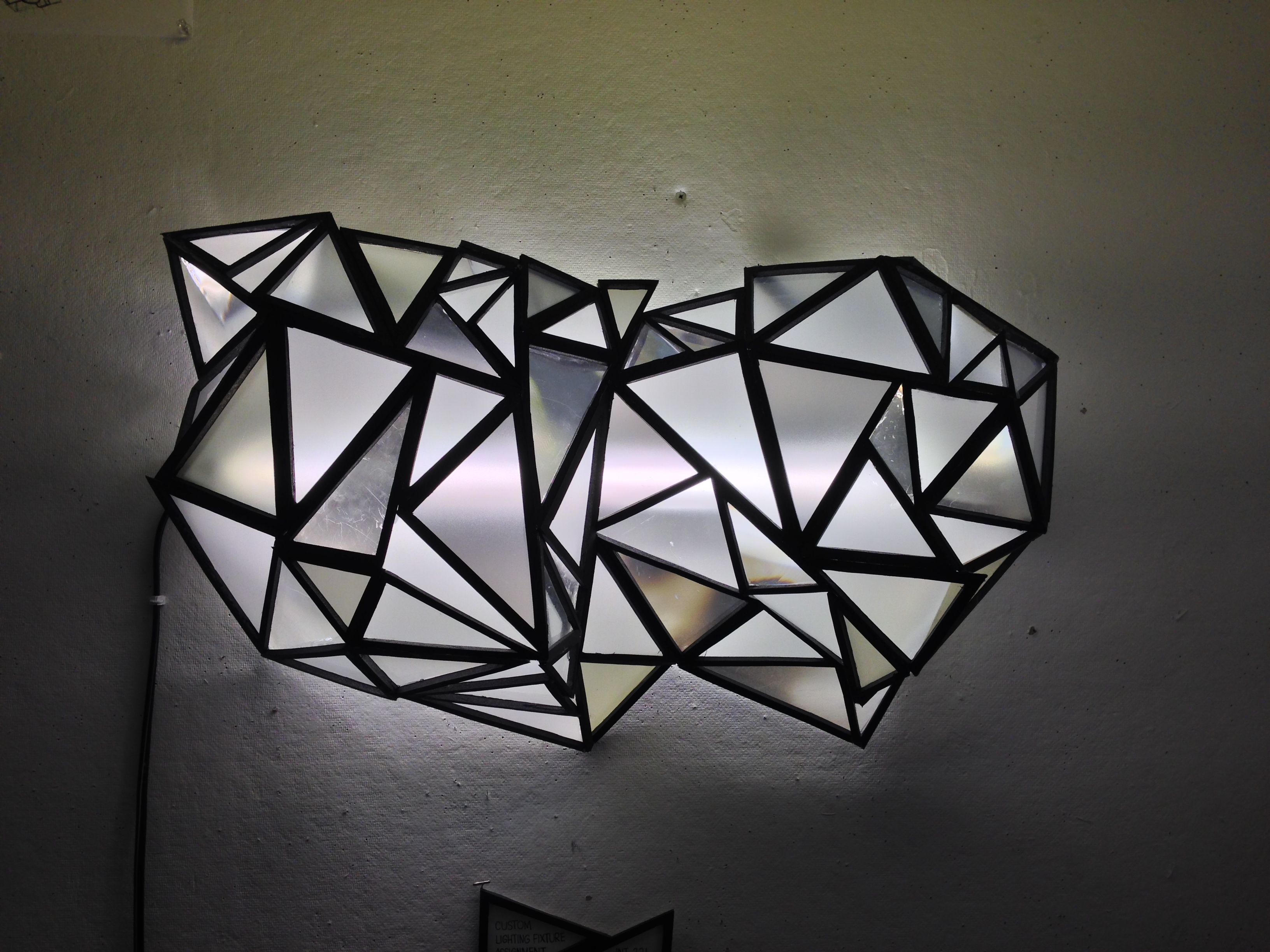
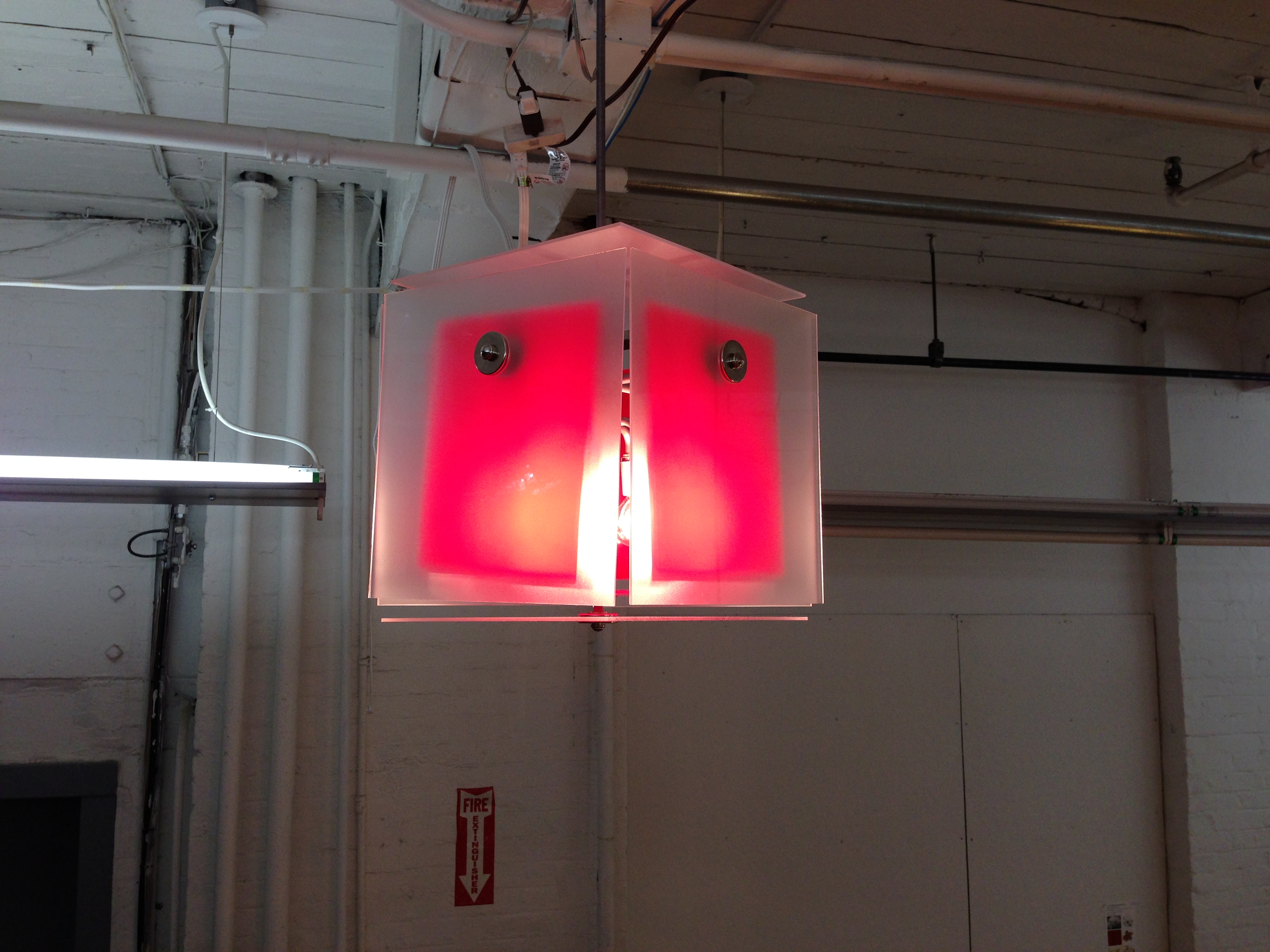
The main design assignment for this  semester’s Pratt students is a cafe.  The students selected their own interior design and had to develop a custom lighting fixture that is integrated with that design.  Here area few of this semester’s  fixtures.

Lauren Mercuri
Lauren Mercuri
Tammy Zhao
Tammy Zhao
Pradthana Likitplig
Pradthana Likitplig
Sol Ok
Sol Ok
Sofia Martinez
Sofia Martinez


Fixture Cost Frustration

One of my clients has expressed frustration with the caveats I place at the end of my lighting fixture budget. Why can’t I give the client a simple budget estimate? The answer is that fixture manufacturers don’t have a manufacturer’s suggested retail price (MSRP) for their products, which is something we’ve all come to expect for products ranging from potato chips to cars. We all know that things we want to buy have an MSRP or list price and it’s up to the seller to decide whether or not to sell at a lower price.

However, with lighting equipment the sales representative and the manufacturer collaborate to establish pricing for each project (see chapter 9). Larger projects with more luminaires will usually pay less per luminaire. This can be frustrating for everyone. It’s hard to develop a reliable fixture cost database when fixture costs are variable.

Another issue with pricing from the sales rep is that it is usually dealer net, distributor net, or DN pricing. This means that the luminaire price the sales rep gives to the designer is the price that the electrical distributor will pay the manufacturer. It does not include the electrical distributor’s markup for overhead and profit, nor does it include possible markups by the electrical contractor and/or the general contractor.   It is up to the lighting designer to estimate the total markup(s) as well as taxes, shipping and such, and add that amount to the projected lighting fixture budget, but designers have no direct knowledge of what markup these firms will add, nor do we have any control over their markups. The result is that I wind up footnoting my budget with notes like markup percentages are estimated, pricing is based on cost estimates provided by sales representative, and pricing is based on projects of similar size and scope.

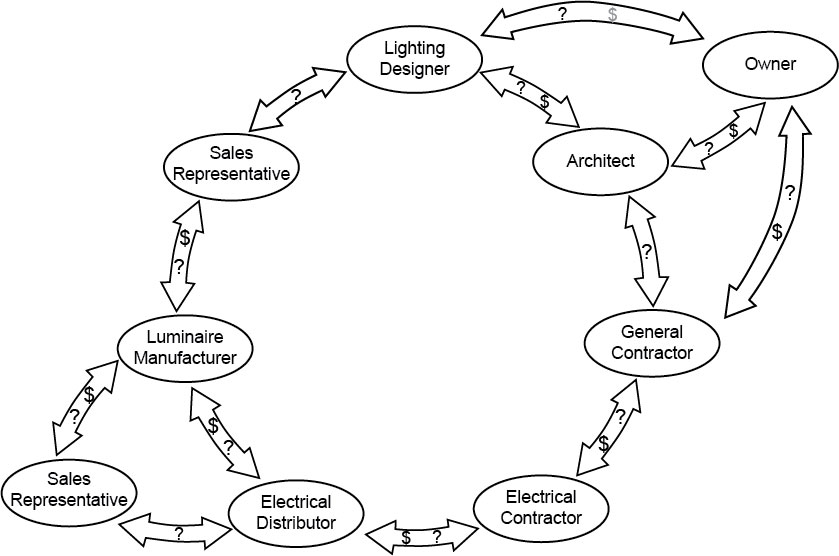
Finally, as I explained here, the fixtures that I specify may not be purchased for the project. Once substitutions enter the picture another layer of mystery is added. Yes, it’s complicated. Here’s a flow chart that tries to explain the flow of information (denoted by question marks) and money (denoted by dollar signs) of design and sales relationships. See chapter 9 for a full explanation.

fixture sales


Lighting Up Pratt

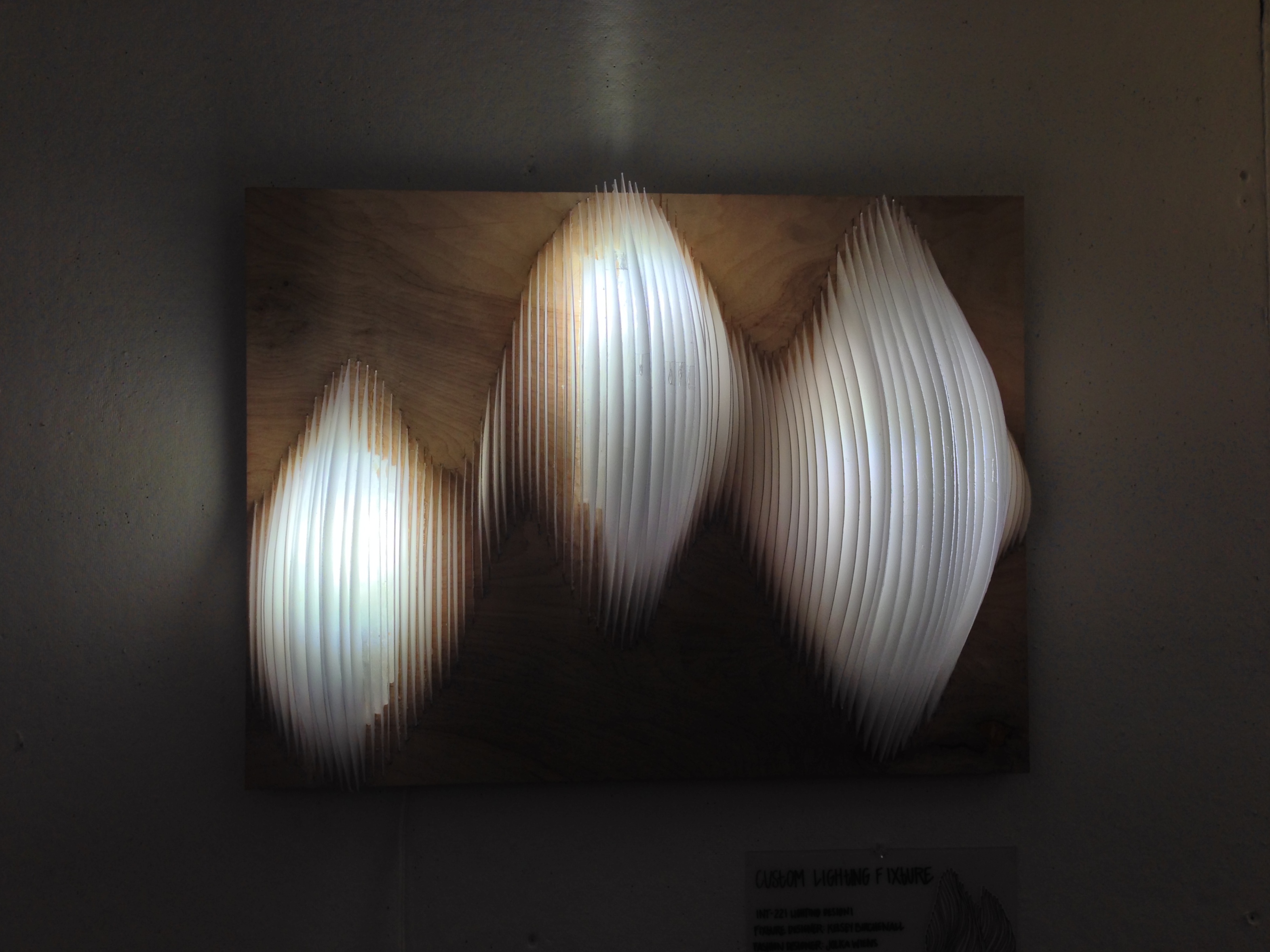
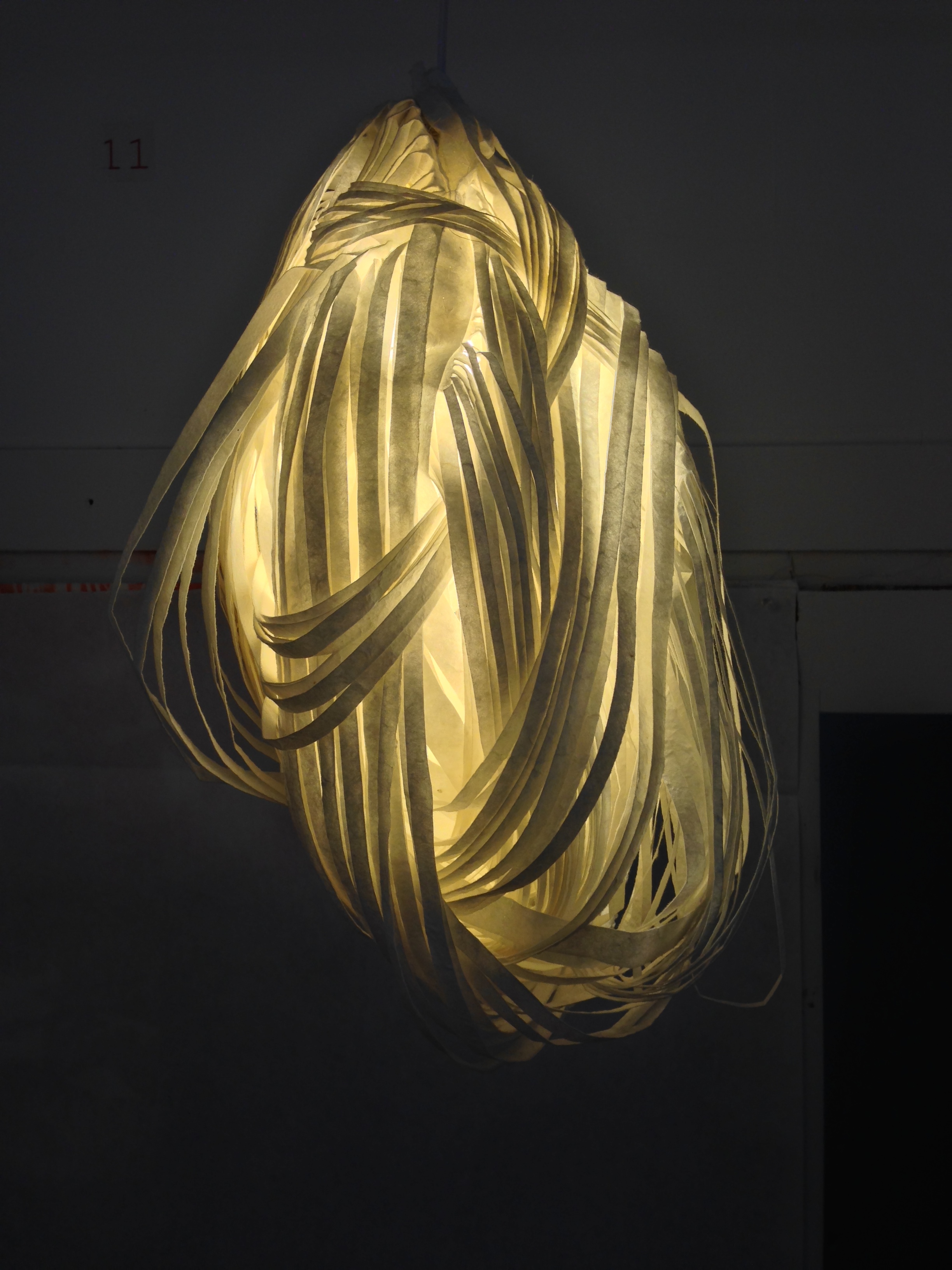
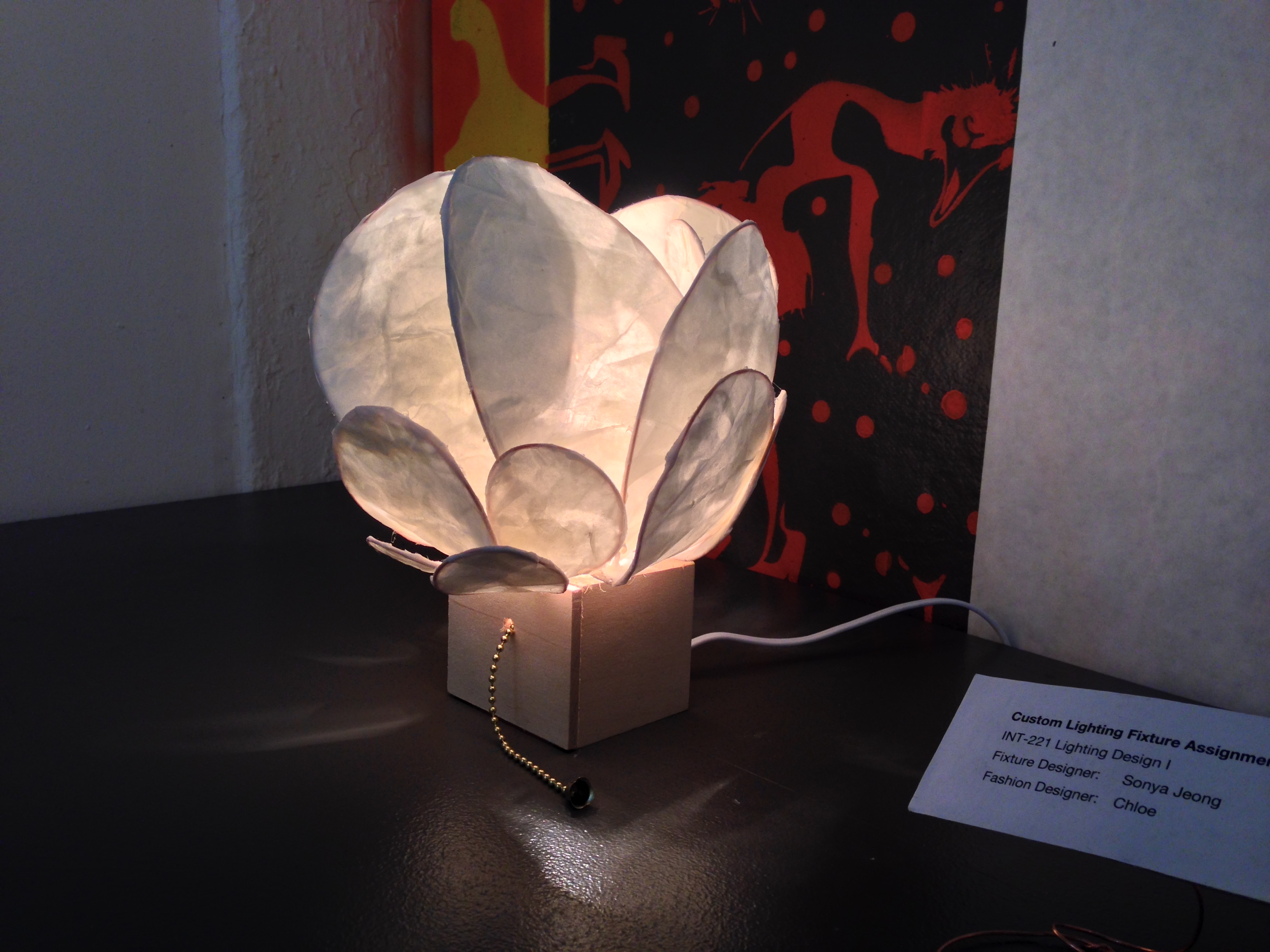
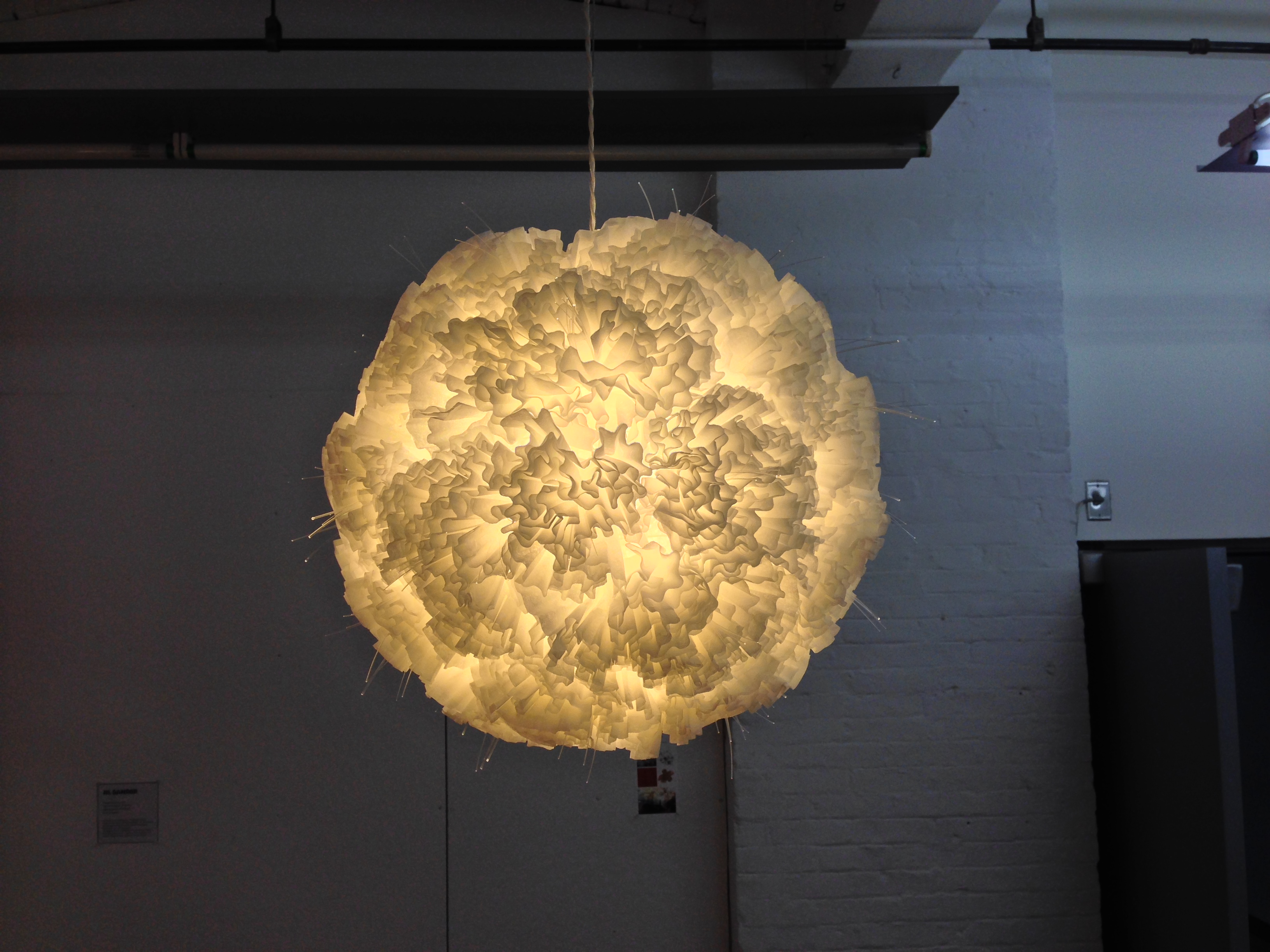
Yesterday my students at Pratt presented custom built lighting fixtures inspired buy the work of a fashion designer.  Here are some of them.

Designed by Connie Chen Inspired by Calla Haynes
Designed by Connie Chen
Inspired by Calla Haynes


Designed by Devon Aerts Inspired by Jil Sander
Designed by Devon Aerts
Inspired by Jil Sander
Designed by Kelsey Birchenall Inspired by Jolka Wiens
Designed by Kelsey Birchenall
Inspired by Jolka Wiens


Designed by Marianne Kim Inspired by Philip Lim
Designed by Marianne Kim
Inspired by Philip Lim


Designed by Sonya Jeong Inspired by Choe
Designed by Sonya Jeong
Inspired by Choe


Designed by YG Jeong Inspired by Longchamp
Designed by YG Jeong
Inspired by Longchamp