Mayor Bill de Blasio’s administration and a host of environmental advocates agree that light pollution should be addressed, but some are disputing parts of a proposed City Council bill.
Source: New York Plan to Save Energy May Mean a Dimmer Skyline
Lighting Design Insights from the Author of Designing With Light and Fundamentals of Energy Efficient Lighting and Controls
Mayor Bill de Blasio’s administration and a host of environmental advocates agree that light pollution should be addressed, but some are disputing parts of a proposed City Council bill.
Source: New York Plan to Save Energy May Mean a Dimmer Skyline
I’ve been hired to review an architect’s lighting design and then design an appropriate control system. The fixtures selected are all LED products by a manufacturer that falls into the high-end residential/economy commercial range of quality and price. The cut sheets are extremely frustrating. After nearly a decade of LED lighting, and with all of the progress the industry has made in setting standards so that designers and specifiers know what they’re getting, this manufacturer still tells us nothing. What basic information is missing?
Lamp life. The only information even remotely connected to lamp life is the statement that the fixture is covered under a five-year warranty. There’s nothing else. Not a word. How much light, compared to initial output, can we expect at that five-year mark? We have no idea.
LEDs do not fail like other lamps do. They gradually dim as they age. At what point is the light output so low that we’d say the lamp is no longer useful? Right now the answer is when the light output has fallen to 70% of the initial output (often referred to as L70), although many designers prefer to use 80% of initial output (referred to as L80). This is calculated using a procedure developed by the IES and designated as LM-80 (details are here and here). What we want, at a minimum, is the IES LM-80 calculation of lamp life to 70% of initial output. L80 data would be even better.
Warranty. The warranty is not on the manufacturer’s web site so, although we’re told that it is good for five years, we have no information about what is covered and what is excluded.
LED manufacturer. With all other lamp types the designer chooses the exact lamp for the project. Criteria such as initial lumen output, mean lumen output, lamp life, color temperature, CRI, and the manufacturer’s reputation for quality are all valid considerations. We have standards that allow designers to make valid comparisons between LED products, too, but we can do that only if that information is generated and shared. I suspect that this fixture manufacturer uses LEDs from a several manufacturers based on the best price available, and that the performance of those LEDs varies widely.
Color consistency. The cut sheet says that the standard applied to their LED selection is, “minimum 3-step color binning.” We are left to infer that means three-step MacAdam Ellipses. A one-step MacAdam Ellipse describes a region on a chromaticity diagram or color space where the edges of the ellipse represent a just noticeable difference from the color at the center (additional information on MacAdam Ellipses is here and here). The data is usually plotted on the CIE 1931 (x, y) chromaticity diagram. The diagram below shows 10-step MacAdam Ellipses.

The color variation within a three-step ellipse would be noticeable to over 99% of the population. Worse, though, is that a three-step ellipse is the minimum, not the maximum. Knowing this, the designer should have no expectation of color consistency from one fixture to another.
Photometrics. The cut sheet contains no information about the optical performance of the fixture. IES files are available, but it’s very difficult to look at the array of numbers and understand performance, which is why the good manufacturers include photometric information on their documentation, including candlepower distribution curves and CU tables.
Part of my review will be pointing out the lack of data about the specified fixtures and recommending several alternates by manufacturers who provide the information necessary to evaluate their products.
After five years of planning the IALD is set to begin accepting applications for the newly created Certified Lighting Designer (CLD) credential. The CLD credential is similar to the LC (Lighting Certified) credential in that it is meant to demonstrate lighting design competency. Unlike the LC, the CLD credential will be awarded based on a portfolio review that demonstrates proficiency in seven areas of professional practice rather than by passing a written test. The other difference between CLD and LC is that the CLD will only be awarded individuals with at least three years of experience as a lead designer. This means that some people who have earned an LC (sales reps, for example) will not be eligible for the CLD.
Why does this matter? First, the LC credential carries some weight, mainly because since 2009 the GSA has required the lead lighting designer on U.S. government projects to be Lighting Certified. However, many designers are unhappy that people who aren’t practicing lighting designers can hold an LC credential. By limiting the CLD to working designers, the IALD hopes it will be seen as attesting to the holder’s skills as a lighting designer, not just their knowledge about lighting in general.
Second, lighting design is in some ways the redheaded stepchild of the architectural design professions. Lighting design is not licensed, meaning that anyone can say they’re a lighting designer. As a result, lighting design is provided by electrical engineers, architects, interior designers, sales people, and manufacturers who have widely varying education and training, and with widely varying degrees of success. The CLD could be a means of identifying who is a lighting designer and who is not.
The key to the success of this project is public awareness. If the IALD only talks about CLD to the lighting design community it will be nothing more than letters following a person’s name on their business card. Building owners and other clients have to understand the value that professional lighting designers can bring to a project, and have to insist that the design team includes a professional lighting designer. Architects and interior designers have to understand the role of a lighting designer and be willing to tell their clients that a professional lighting designer is an important part of the design team who is worth the additional fee. If, through the CLD, the IALD is able to raise awareness about lighting design in those who can benefit from it, it will have been well worth the effort.
I’m between classes at Pratt, so I’ll have to be brief. It’s the time in the semester when my students start to feel overwhelmed. After talking about vision, light, psychology, design, lamps, color, and light fixtures they’re about to start working on designing projects for class. The most common question is something like, “How can I possibly organize all of this information and start to make meaningful design decisions? I need to pick a light fixture, then I need to pick a lamp for that fixture, then I need to lay out the fixtures to arrive at the lighting that I want, right?”
Wrong! A lighting design doesn’t come from the lighting fixture, so design decisions shouldn’t start there. In a push-me-pull-you kind of way the first questions are always about the end result. Rather than choose a fixture and follow the light down into the room, what we need to do is understand the lighting requirements and follow the light up to the lamp and luminaire. How do you want the space to look and feel? What lighting techniques can help achieve that look? Is there an overarching thematic element that needs to be included? How can we express the lighting goals in terms like intensity, color, and distribution? The answers to those questions should start to lead the designer to requirements for the fixture/lamp combination, and to the number of fixture types required to implement the design.
I explain that it’s not always a linear process, and that a certain amount of trial and error is part of any design. “Does this fixture give me the distribution and intensity I need?” isn’t always a yes/no question that can be answered by looking at a cut sheet. Sections may have to be studied, calculations run, different lamps and accessories considered, always with the end goal in mind.
Yes it’s hard. So hard, in fact, that some people spend several years studying light and design at the college level before getting their first job, only to discover that there’s so much more to learn! If you have a passion for light and design, though, trust me it’s worth it.
Yes, the Grammy Awards are all about the music, but for lighting designers it’s also about the way the performance are lit. Last night showcased some of the best and worst lighting you’re likely to see on tv this year. Among the best was the lighting for Ariana Grande’s performance of “Just A Little Bit Of Your Heart.” Surrounded by glowing crystals, luminous fog, and a small backlit orchestra all she had to do was stand still and sing. The lighting director created a beautiful environment of soft light and slowly changing color that was in harmony with the feeling of the music.
Among the worst lighting was Kanye’s performance of “Only One.” The song opened with him standing over a beam of light shooting up from the floor. As he sang he moved in and out of the light, but without meaning or intention. He was visible at some times and not at others, always with shadows obscuring his face. At the beginning of the second verse the music swelled, providing an ideal opportunity to build the light so that he was better lit, but nothing happened. It’s impossible to know why. Did he tell the lighting director not to change the lighting? Did he skip rehearsal so that there wasn’t another lighting cue ready to go? Either way the result was him wandering around, in and out of the light, for the entire song. Here it is:
The New York City chapter of the IES will host a presentation by Mariana Figueiro and Leora Radetsky of the Lighting Research Center titled “Swimming in an Ocean of Light: Using Light for Health and Well-being.” The program will include the IES Light and Health seminar, which they co-authored, as well as updated material with recent research results and their insights about “turning research into design practice.”
If you’re interested you can RSVP here.
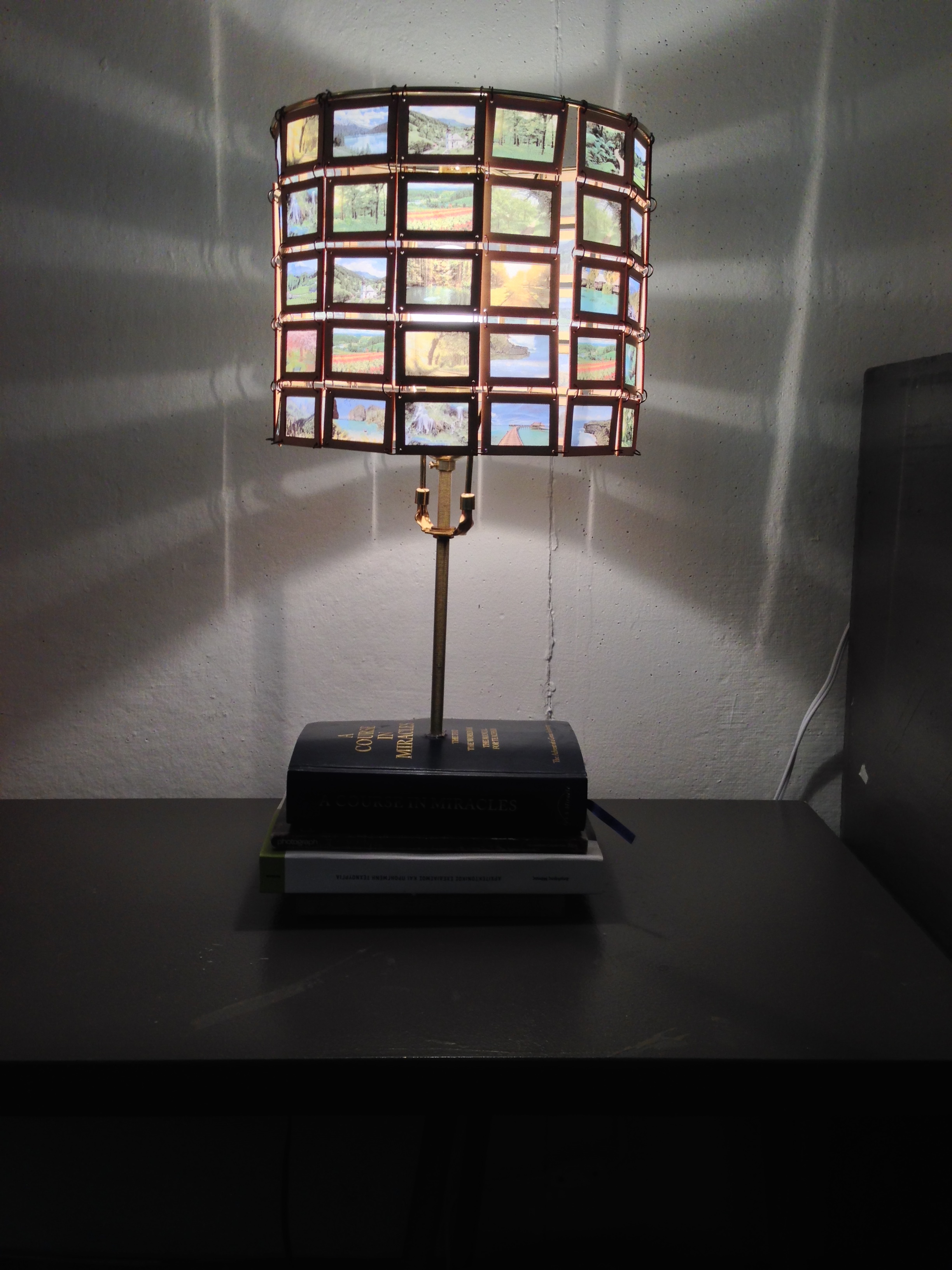
The main design assignment for this semester’s Pratt students is a cafe. The students selected their own interior design and had to develop a custom lighting fixture that is integrated with that design. Here area few of this semester’s fixtures.




The Lighting Research Center at Rensselaer Polytechnic Institute recently published a short video in which LRC director Mark S. Rea discusses the costs and benefits of lighting. Here it is.
If you set aside the plugs for the LRC, his statements, and those in his book Value Metrics For Better Lighting, are similar to what I’ve said throughout Designing With Light, which is that it’s the quality of the light and lighting design that are of primary significance while the amount of light that is delivered is secondary. Therefore, the true value of the lighting design is found in the design’s success in meeting the multiple requirements of the owner and the occupants of the space, not in the cost of hardware and installation.
Unfortunately, there are several factors that have created resistance to placing value on thoughtful, appropriately designed lighting. The first is that most people simply do not see light (pun intended). For far too many people, if the light is bright enough for them to see what they’re doing it is acceptable and little or no judgment is made regarding the other factors of lighting design, such as color rendering, providing visual interest, overall effect on occupants, etc. I find that if I show clients or students the difference between light that is adequate for vision and light that creates an appropriate atmosphere or environment they can see it and appreciate the difference. It is also a surprise to them that lighting design can make such a difference in a space.
The second factor is that project budgets are set in dollars with no little or no allowance made for the quality of the design. I have often worked on projects where the project budget and the lighting equipment budget have been set, although design work has barely begun. I understand that a client only has so much money to spend and that has to be respected. However, 1) No bean counter in the world can predict what the design team will develop. Budgets are more appropriately set in coordination with the design team after the design team understands the full extent of the client’s needs and desires. Then, if the projected cost exceeds the client’s budget, informed decisions can be made to pull back on certain aspects of the building’s design or to allocate more money to construct the building the client wants. 2) Spending more money up front on efficient lamps and fixtures, and on controls, can more than pay for itself in savings on energy and maintenance.
Another factor is that we value what we can measure. Since the early 1900s the lighting design community has invested a great deal in determining how to measure light and on how much light is required for “visual tasks.” Those two aspects became the criteria for evaluating lighting design, and are still presented as primary in many lighting textbooks. In the 1970s John Flynn and others began to study how light can affect the impressions one forms of a space. Later research examined the relationship between a lighting design and those occupying the lighted space including: the affect on worker productivity, absenteeism, and worker retention; student learning outcomes and test scores; retail sales; a light source’s spectrum and clarity of vision; and light’s affect on sleep cycles and other aspects of health. This research has shown over and over again that intelligent, thoughtful, appropriate lighting design can have a significant effect on the occupants and on the owner’s bottom line, whether that bottom line is to make more money, increase student success, or improve health.
Knowledgeable lighting designers can bring so much more to a building than just illumination, yet illumination and lighting design remain synonymous to most of our colleagues and clients. That is part of the reason only about ten percent of construction projects have a lighting designer on the team. Lighting designers and lighting design professional organizations need to do a much better job of educating design team members and our clients about quality lighting design, what it is, and why it matters.
By some estimates less then 10 percent of construction and renovation projects include a professional lighting designer on the design team. Why? Who’s looking after the lighting design? What can the lighting design community do about it?
The reasons projects go forward without a lighting designer range from the owner’s lack of understanding of what a lighting designer does to the architect’s desire to keep fees low. These are usually coupled with the belief that other team members can take care of the lighting just as well as well as a lighting designer. The “others” who may provide some or all of the lighting design include the architect, interior designer, electrical engineer, electrical contractor, and lighting salesperson. These other professions can act as lighting designers because the practice of lighting is so young and is unlicensed.
Why should architects and building owners hire a lighting designer? My first answer is, “You’re hiring experts in every other aspect of building design and construction, so why would you NOT hire an expert in lighting, too? Don’t you want the building to look as good as you imagine it will?” My other answers are:
What can the lighting industry to do promote the use of lighting designers? It seems to me that our professional organizations, especially the IES and IALD, have to take the lead here because individuals can’t have enough impact. Both organizations do a lot of work within the industry, but I don’t see any outreach to the real decision makers. What could they do? Here are a two thoughts:
What do you think? What can we do to promote lighting design?
The Illuminating Engineering Society has released a new Recommended Practice. RP-31-14 Recommended Practice for the Economic Analysis of Lighting is now available as a PDF download or soft back from the IES Online Store. From the IES:
Good lighting should be responsive to the needs of the user. Among those needs are the aesthetic and the visual, as admitted in the oft-quoted “lighting is both a science and an art.” But the user also has economic needs. In fact, it is the economic needs that often drive the decision making process when lighting systems are designed and purchased.
This recommended practice is written from the point of view that “economic analysis” is not the same as “how to beat the budget.” Rather than considering economic analysis as the antithesis of engineering or artistic analysis, is should be thought of as subsuming these other needs. When a competent lighting professional takes care of economic needs, in conjunction with the artistic, engineering, and other needs, it increases the likelihood a project will have success and longevity. Financial considerations ad demonstrated through an accurate lighting financial analysis are important, but other elements such as aesthetics, human visual performance resulting from a lighting system appropriate to a given task, and other considerations involved in lighting for the human and natural environment are of equal importance.